
What Hilary Flint Taught Me About Showing Up
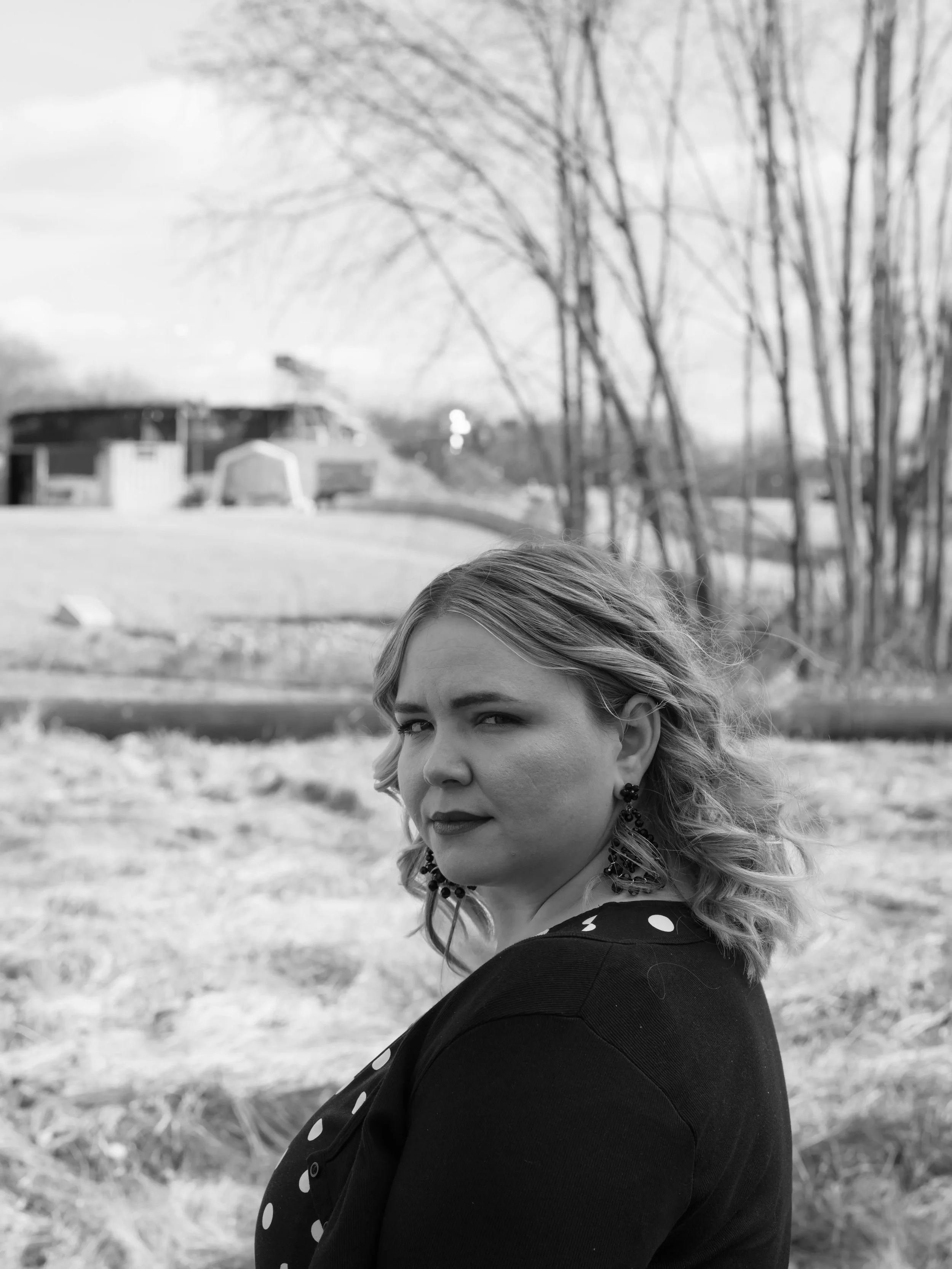
When I think about the people who have shaped my understanding of what this work truly requires, Hilary Flint is one of the first people who comes to mind.
Hilary lived in Enon Valley, Pennsylvania — just four miles from East Palestine, in a house that had been in her family for four generations. She was not required to evacuate the night of February 3, 2023. But she was afraid, so she left anyway. And when she came back, she opened her front door and knew, immediately, that something was wrong.
"All it took was opening the door to our house," she has said. "The smell was so strong, it just immediately enveloped you." Within an hour she had headaches, eye irritation, and rashes. Her skin turned red like a lobster. She broke out. She was incredibly congested. And the symptoms did not go away when she left. They followed her — and they are still with her today.
What Hilary did next is what I will always admire about her.
She did not wait for someone to come fix it. She turned her situation into action — in her own words, leaning into her skills as a storyteller to make sure that the people impacted by this disaster were not forgotten. She co-founded the Unity Council for the East Palestine Train Derailment — a grassroots organization that grew to include hundreds of members across Ohio and Pennsylvania, all of them trying to get answers, access resources, and make sure their voices reached the people in power.
Hilary has traveled to Washington, D.C. to meet with lawmakers. She has organized press conferences, held town halls, and built a network of impacted residents across state lines who support each other through the long, exhausting work of recovery. She has engaged Pennsylvania Governor Josh Shapiro and continued pushing for the community's restoration long after the initial crisis faded from public view.
She has done all of this while managing her own health. Health symptoms have driven her to relocate to upstate New York, yet she has continued her advocacy without pause.
"Life is out the window," she has said. "This has become our life."
That line stopped me when I first read it. Because I understand it. I understand what it means to have your ordinary life — the dinners, the school pickups, the weekends that used to be just weekends — slowly replaced by this work. The phone calls. The hearings. The meetings. The weight of knowing that people are counting on you to keep going even when you are exhausted.
But what Hilary demonstrates, day after day, is that showing up is not about having the energy. It is about knowing that the work matters more than the cost of doing it.
She is also honest in a way that I deeply respect. When the Norfolk Southern settlement was announced, Hilary said clearly that her payout from the class action settlement would be less than her medical bills. She opted out and pursued an individual suit. She said what many community members felt but struggled to articulate — that the settlement fell short of addressing the full scope of the harm. She does not soften the truth to make powerful people comfortable. She tells it because the community she represents deserves nothing less.
That is the kind of advocacy that the Disaster Voices Institute was built to support and amplify. Not the kind that looks polished from a distance, but the kind that is rooted in real experience, sustained by real commitment, and honest about the gap between what communities have been given and what they actually deserve.
Hilary Flint is one of the reasons I believe that community voice is the most powerful force in disaster recovery. Not because it is easy. But because it is true. And because people like Hilary refuse to let the truth be buried under settlements, reassurances, and the passage of time.
I am grateful to know her. I am grateful to work alongside her. And I am grateful that communities like the ones she represents have someone so determined, so skilled, and so deeply human standing in their corner.
That is what this work looks like. That is who it is built for — and who it is built by.